Sudden Pressure Loss Repair
We trace sudden whole-house pressure drops for homeowners and property managers, checking supply lines and accessible plumbing; diagnostic cost is typically $75–$200, depending on testing and travel.
A booster pump installation starts with matching the pump to the home’s water demand, not simply choosing the largest unit. Near Meteor Crater in Winslow, homeowners should plan for Northern Arizona’s snow and seasonal freeze-thaw, which can affect exposed plumbing; higher-elevation winter freezes make protected placement important.
Browse all service options available across Arizona and choose the right fit for your project.
We trace sudden whole-house pressure drops for homeowners and property managers, checking supply lines and accessible plumbing; diagnostic cost is typically $75–$200, depending on testing and travel.
We repair or replace residential pressure regulators, with cost shaped by valve size and access. Typical replacement runs $250–$600.
We repair residential booster pumps, checking pump controls and connections; typical repair costs depend on pump capacity, parts, and access, with larger or harder-to-reach units costing more.
We trace weak hot-water flow in Arizona homes, checking heater connections and nearby piping; typical repairs run $150–$600, depending on access and parts.
We restore weak faucet flow for Arizona homeowners, checking the aerator and fixture supply; repair scope and access shape the cost.
We trace and repair pressure-related water leaks in homes, including concealed pipe leaks; access and wall repair needs shape the job scope and cost.
We repair or replace residential well pressure tanks, matching tank size and plumbing connections; replacement typically runs $500–$1,500 depending on tank size and access.
We clear residential and commercial pipe blockages, including debris in accessible drain lines; job pricing depends on blockage depth, pipe access, and the repair needed.
We clear or replace clogged home water filters; service scope and cartridge access affect the job. Prescott Courthouse Plaza is a local reference, while elevation-related rainfall and Flagstaff’s colder winters can sh...
We repair residential softener flow restrictions, checking valve and bypass access; typical repairs run $150–$500, depending on parts and access.
Well water pressure repair for homeowners includes testing the well system and its pressure tank; tank size and plumbing access affect replacement scope, with tank work typically $500–$1,500.
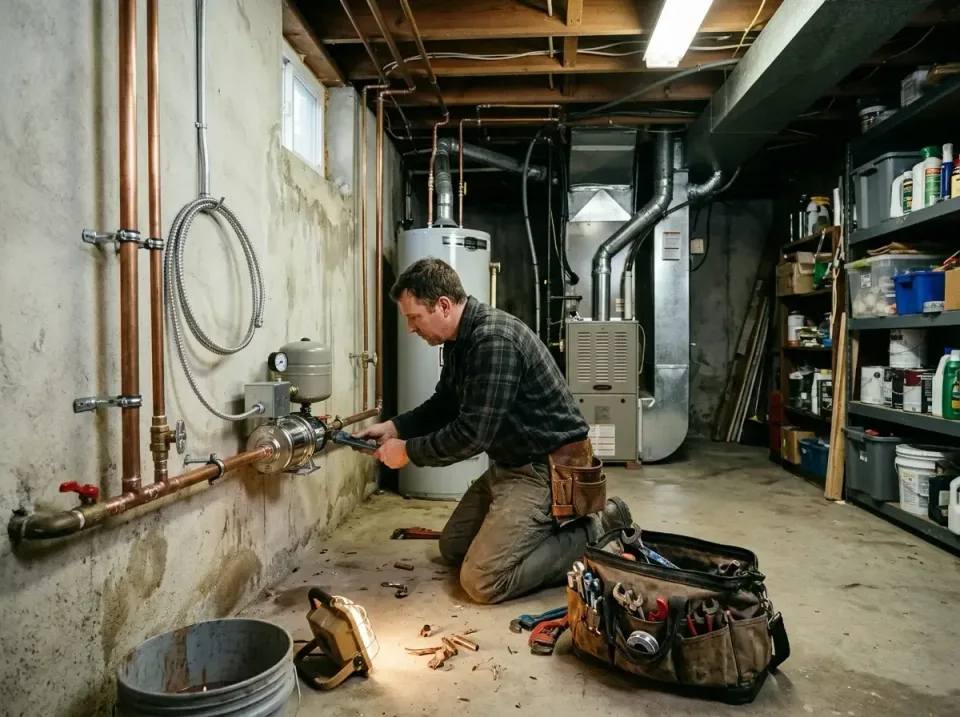
Weak flow upstairs or a shower that falters when another fixture runs may call for a water booster pump installation but only after we confirm the supply can support one. Our crew measures pressure under flow and estimates household demand in gallons per minute; pump sizing must account for both flow rate and pressure rise. An oversized pump can raise pressure unnecessarily, while an undersized one may not improve service.
Near Downtown Phoenix, equipment placement and access can affect the installation plan. Low desert humidity increases evaporation and household water demand, so we size for realistic simultaneous use rather than one faucet alone.
Hard-water mineral buildup can narrow passages and restrict flow; adding a pump without checking that restriction may leave the underlying problem in place. Summer heat can also accelerate wear on outdoor pump equipment, making a protected location worth considering.
We explain the measurements and scope before work begins. For a review, call Arizona Plumbing Pros at (877) 773-0781.
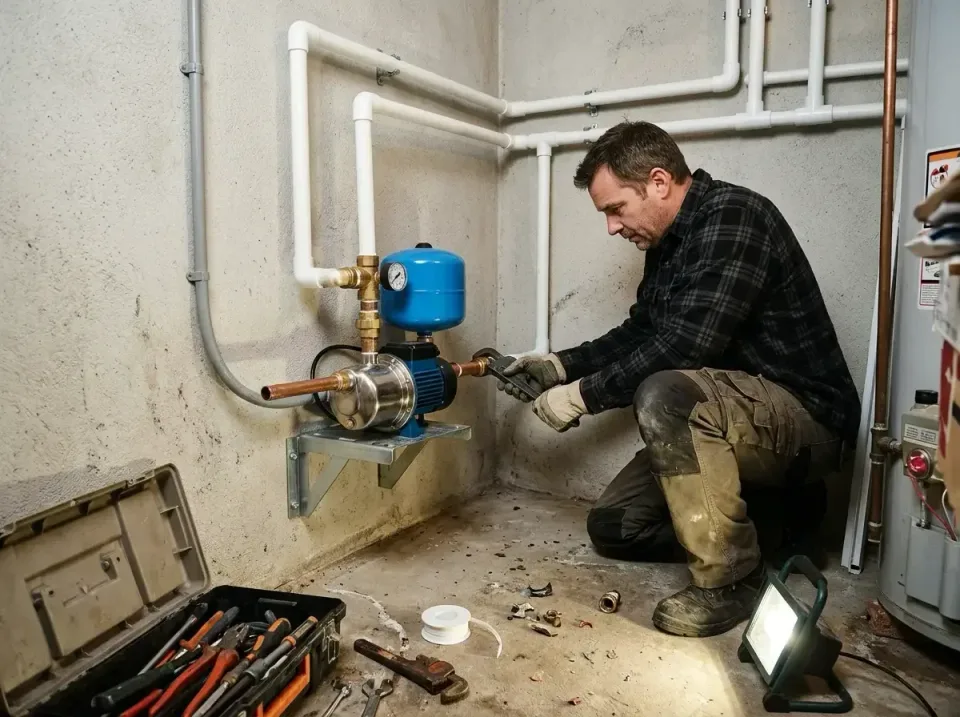
We begin by recording the existing supply conditions and the locations where water is used. A pressure gauge at a hose-bib connection gives a useful reading, and we compare pressure with water off and flowing rather than relying on a single static measurement. We then estimate demand and select equipment using its pump curve, which relates flow to head.
Next, we review the proposed location, electrical access, plumbing connections, and any scope-dependent permit needs. Arizona has no coastline or coastal climate, so coastal exposure is not part of the installation assumptions; the actual site still guides equipment placement.
Near Arizona State University in Tempe, access and the home’s layout determine how we stage the work. In areas served from Arizona Snowbowl, Flagstaff, cold snaps can freeze outdoor pipes and hose bibs, so exposed connections need appropriate protection.
We explain the agreed scope before installation, then test the completed system under flow and review its operation with you. For more background, read our booster pump installation information.
A home near Camelback Mountain can need a different installation plan than a property at a higher elevation. High-elevation Flagstaff winters differ sharply from Phoenix winters, so outdoor equipment placement and exposed connections deserve a site-specific review. Guessing the pump size is a costly mistake.
Our crew measures flow and pressure, then checks the pump curve against the expected demand and elevation losses. That step helps avoid selecting a unit that runs without delivering the needed pressure rise.
We also review wiring and plumbing connections together; a pump is not a complete installation if its electrical supply or connection details are unsuitable. Near Grand Canyon National Park, elevation and site access can shape the work, while a property near Red Rock State Park in Sedona may need a different placement plan.
We confirm the proposed scope in plain language before starting, rather than leaving the homeowner to infer what is included. Arizona Plumbing Pros is an Arizona ROC-licensed plumbing contractor, bonded and insured, and a PHCC member. A scope review is a practical next step.
Weak pressure throughout the house may lead you to consider a booster pump, but the unit’s capacity and wiring are the main installation price drivers. A typical booster pump installation is $800–$2,500, depending on pump capacity and wiring. Site access, connection changes, and the final scope can also affect the quote.
For comparison, pressure diagnosis commonly runs $75–$200, reflecting testing and travel; that can establish whether a pump is appropriate before equipment is selected. A well pressure tank replacement is typically $500–$1,500, with tank size and plumbing affecting the work.
These are different jobs, not automatic add-ons to a booster installation. We explain which work applies after reviewing the site and measurements, and we do not treat a pump as a cure for a supply restriction.
Final quotes vary with repair scope, equipment, access, and site conditions. Contact Arizona Plumbing Pros at (877) 773-0781 for a final quote matched to the job scope.
New rattling or humming near the pump is a sign worth checking. Note when the sound starts and whether it continues after water use stops. A change in operating noise can point to wear or a mounting issue before the pump stops working.
Corrosion around pump fittings is an early warning sign. Look for flaking, discoloration, or dampness without opening electrical compartments. Arizona hard water can leave mineral deposits on plumbing components, so have unexplained buildup checked before it interferes with service.
Moisture beneath or beside the pump is a sign to investigate. Check whether the area stays damp after nearby water use ends, and avoid touching wiring. A technician can check for active leaks before any pressure change or installation work.
A pump that starts and stops repeatedly, even when water use seems steady, may need attention. Notice whether the cycling occurs during ordinary household use. Early evaluation can help identify whether the pump, tank, or switch is suited to the system.
Confirm whether the scope covers the pump, compatible tank or switch considerations, wiring needs, pressure checks, and leak verification. A clear scope helps you understand what work is planned and what may require a separate decision.
The technician may need a clear path to the pump, plumbing connections, and electrical shutoff. Ask about access in advance, and keep the installed pump reachable for future service rather than enclosing it behind a permanent obstruction.
Written terms make the planned work, exclusions, and any changes easier to review. Ask how adjustments are approved before work proceeds, so you can compare the explanation with what was discussed and make an informed choice.
For a booster pump scope review that considers monsoon downpours, access near Tucson Downtown, or a property around Watson Lake in Prescott, call Arizona Plumbing Pros at (877) 773-0781.
Yes, a correctly sized booster can support household demand when the existing supply is suitable, but the pump still needs protected placement. Low-desert summers bring prolonged extreme heat, so ask us to review whether the proposed location shields outdoor equipment from heat exposure.
Yes, installation can be considered there after we check the property’s supply, flow needs, and available equipment location. The Kartchner Caverns State Park area is a useful reminder that Arizona sites differ; share site photos and access details so we can review the actual conditions.
Yes, if measurements show that a pump is appropriate and the proposed location suits the property. Around Lowell Observatory in Flagstaff, elevation and the specific site layout should inform equipment selection and placement rather than relying on a generic setup.
Yes, photos of the water connection area, electrical access, and any proposed pump location help us review access before scheduling. For homes near Mesa Arts Center, include a clear view of the equipment area and note where water use is weakest.
A suitable installation can serve the home, but placement and equipment selection matter during low-desert summers with prolonged extreme heat. Near Sabino Canyon Recreation Area, provide details about any outdoor location so our crew can consider exposure and access when reviewing the scope.
Select a city to find local low water pressure repair providers we cover in Arizona.