Sudden Pressure Loss Repair in Queen Creek, AZ
We trace sudden whole-house pressure drops for homeowners and property managers, checking supply lines and accessible plumbing; diagnostic cost is typically $75–$200, depending on testing and travel.
Near Schnepf Farms, hard water mineral buildup can gradually narrow plumbing passages, leaving a shower weak even when the rest of the home seems fine. A faucet aerator is a safe first check: unscrew it by hand if possible, rinse away visible grit, and see whether flow improves.
Queen Creek’s low desert humidity increases evaporation and household water demand, so a pressure problem can be especially noticeable during everyday use. Our crew measures pressure and follows the restriction through the plumbing before recommending a repair; we do not guess from one slow faucet. We have served Queen Creek for more than 12 years, working with stucco tract homes, tile-roof homes, and larger properties.
We explain what we find, confirm the work scope, and repair the cause of weak flow.
We trace sudden whole-house pressure drops for homeowners and property managers, checking supply lines and accessible plumbing; diagnostic cost is typically $75–$200, depending on testing and travel.
We repair or replace residential pressure regulators, with cost shaped by valve size and access. Typical replacement runs $250–$600.
We repair residential booster pumps, checking pump controls and connections; typical repair costs depend on pump capacity, parts, and access, with larger or harder-to-reach units costing more.
Install a residential booster pump sized for household flow; typical Queen Creek, AZ jobs run $800–$2,500, depending on pump capacity and wiring. We serve homes near Downtown Glendale and beyond.
We trace weak hot-water flow in Queen Creek, AZ homes, checking heater connections and nearby piping; typical repairs run $150–$600, depending on access and parts.
We restore weak faucet flow for Queen Creek, AZ homeowners, checking the aerator and fixture supply; repair scope and access shape the cost.
We trace and repair pressure-related water leaks in homes, including concealed pipe leaks; access and wall repair needs shape the job scope and cost.
We repair or replace residential well pressure tanks, matching tank size and plumbing connections; replacement typically runs $500–$1,500 depending on tank size and access.
We clear residential and commercial pipe blockages, including debris in accessible drain lines; job pricing depends on blockage depth, pipe access, and the repair needed.
We clear or replace clogged home water filters; service scope and cartridge access affect the job. Prescott Courthouse Plaza is a local reference, while elevation-related rainfall and Flagstaff’s colder winters can sh...
We repair residential softener flow restrictions, checking valve and bypass access; typical repairs run $150–$500, depending on parts and access.
Well water pressure repair for homeowners includes testing the well system and its pressure tank; tank size and plumbing access affect replacement scope, with tank work typically $500–$1,500.
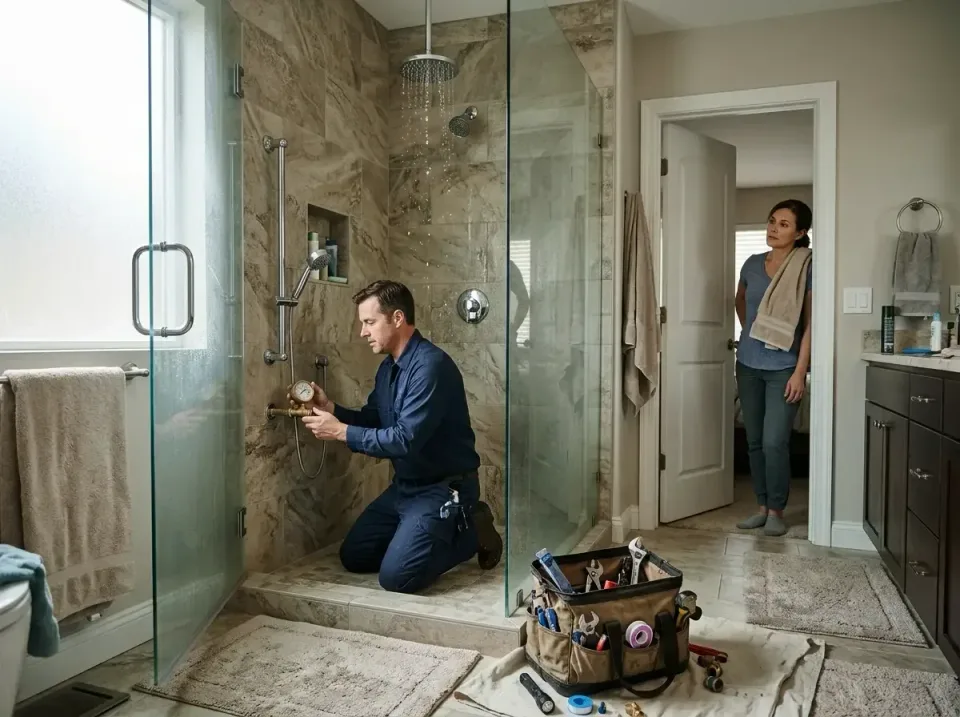
Queen Creek’s long, hot summers put outdoor pump equipment through extended heat exposure, so our team checks the equipment and its connections when a property depends on a pump. At Horseshoe Park and Equestrian Centre, local activity provides a familiar landmark for understanding our service area; nearby property owners can expect a measured diagnosis rather than a guessed replacement. Phoenix summer highs often top 100°F, a reminder that exposed equipment needs attention before heat-related wear interrupts water flow.
We measure first, discuss the repair options, and confirm the agreed scope before work begins. For a visit, call (877) 773-0781.
A shower that weakens when another tap runs can point to a flow restriction or a system that cannot keep up. During Queen Creek’s June-through-September monsoon season, dust and storms can also expose wear around outdoor equipment; our crew checks the supply, filters, valves, and pump before choosing a repair. You can note which fixtures lose flow together before we arrive.
For low pressure throughout a tile-roof home, we compare readings at more than one point and inspect accessible piping for a leak or blockage. Monsoon downpours can bring flash flooding, so after a storm, check visible outdoor plumbing for damage without opening electrical equipment. Our team serves Queen Creek ZIP codes 85142 and 85140, including routes along Ellsworth Road and Hunt Highway.
After a hard monsoon downpour, a sudden pressure change deserves a check of the fixtures and exposed plumbing, not an assumption that the municipal supply is at fault. Storms can expose roof and drainage leaks; near Queen Creek City Hall, our team can inspect accessible lines and trace whether a leak is affecting flow. Do not open a wet electrical enclosure.
If pressure changed after a water softener installation, compare flow at a fixture before and after the unit only if its bypass control is clearly marked and easy to operate. A restricted softener can reduce flow, while a leak may require a different repair.
We check the installation and measure pressure before recommending work. Call us when the drop affects several fixtures or the bypass check does not clarify the cause.
A pressure reading means little without knowing whether water was flowing. Static pressure is measured with fixtures closed; our crew also records readings while water runs, which helps distinguish supply pressure from a restriction inside the home. Near the Queen Creek Historical Museum, we use those measurements to explain the diagnosis before recommending a repair.
Skipping a permit or required inspection can create problems during later repairs or property transactions. Ask our team to explain the scope before work starts.
Get a clear diagnosis and practical repair options from a team familiar with Arizona plumbing conditions.
Technicians check pressure at fixtures and across the system, then explain what they find and which repair options fit before work begins.
Twelve years in business and experience with Arizona hard water, heat, and mineral buildup help the team assess strain on regulators, filters, and pumps.
The team schedules service across Arizona and coordinates routes around travel distance and local access, helping set clear expectations for a Queen Creek visit.
The crew checks the pressure and system condition, then reviews repair choices with you before beginning work.
Discuss the Issue
You describe where pressure is low and when it happens. The technician uses those details to plan checks across the affected fixtures and system.
Test Pressure
The technician records static and flowing pressure, then checks multiple fixtures to distinguish a localized restriction from a system-wide concern.
Complete and Check
After the agreed repair, the technician checks for active leaks before increasing system pressure and confirms the system response with you.
Upstairs faucets that barely produce water can be an early clue that pressure is not reaching fixtures evenly. Notice whether nearby fixtures behave the same way; that detail can help the technician narrow the check.
Hot water pressure that is lower than cold can indicate a restriction limited to the hot-water side. Comparing the same fixture's hot and cold flow gives the technician a useful starting point for diagnosis.
Dust and heat exposure can add strain to plumbing components, while seasonal outdoor use may make pressure changes easier to notice. A pressure check can help identify whether the issue is at a fixture or elsewhere in the system.
Hot Sonoran Desert conditions can place added stress on regulators, filters, and booster pumps. If pressure changes during periods of heavy household use, a technician can test fixtures and system pressure and explain repair options.
Summer monsoon downpours can bring dust and debris around outdoor plumbing and equipment. Checking pressure and visible system conditions can help distinguish a fixture restriction from a broader supply or pump concern.
Mild, dry winters are a practical time to address pressure concerns without relying on a particular weather window. A technician can test flow at several fixtures and check system components before recommending a repair.
Permit needs can depend on the work involved and local requirements. Ask the provider to clarify whether permits apply and who will handle them before agreeing to the job.
Some checks may require access to fixtures, plumbing equipment, or a well system. Confirm which areas need to be clear so the visit can proceed efficiently.
Request a quote online or contact our Queen Creek, AZ team directly by phone or email.
Watch for these warning signs: visible damage, active leaks or water intrusion, unusual noises, rising energy bills, or a system older than 15–20 years. If you spot any of these, call us immediately for a free assessment early action prevents far costlier repairs.
Costs depend on the scope of work, materials, and your location. We provide a detailed written estimate before any work starts no hidden fees, no surprises. Call us or fill out the quote form above to get a number specific to your property.
Most requests receive a same-day or next-business-day response. For emergency situations, call us directly we maintain priority scheduling for urgent cases across States.
Yes. Every provider in our network carries the required state and local licenses, general liability insurance, and workers’ compensation coverage. We verify credentials before connecting you with anyone.
We operate across Arizona. Browse our state pages to find the cities we serve in your area.
Ask for proof of license and insurance, a written scope of work, a detailed cost breakdown, timeline, warranty terms, and references from recent local jobs. Never pay the full amount upfront.
Low Water Pressure Repair is also available in these nearby communities across Arizona.