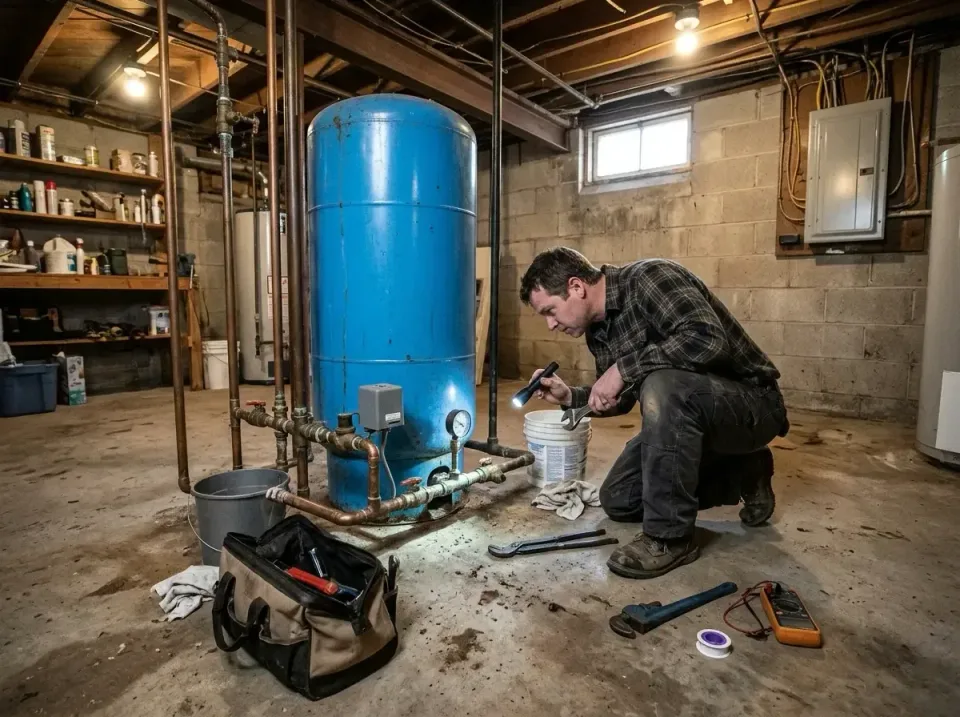
Sudden Pressure Loss Repair
We trace sudden whole-house pressure drops for homeowners and property managers, checking supply lines and accessible plumbing; diagnostic cost is typically $75–$200, depending on testing and travel.
Low pressure after a water softener installation often points to a restricted bypass, clogged screen, or connection issue not automatically a need for a bigger pump. Start by checking that the bypass is fully in service and compare flow at several fixtures; hard water mineral buildup can also narrow older pipes and make the new restriction more noticeable. Small checks first.
In Arizona, low humidity increases evaporation and everyday water demand, so weak flow can become especially inconvenient during busy household use. Near Camelback Mountain in Phoenix, homes still need a diagnosis based on their actual plumbing rather than a one-size-fits-all assumption.
We look for pressure loss across the softener and check what changes when water is flowing. If the bypass and visible connections look correct but pressure remains weak, stop adjusting valves and arrange a measured inspection.
If pressure fell immediately after the softener went in, check the bypass handle or valve position first: it should be set for normal service, not bypass or a partially closed position. Then confirm the unit’s inlet and outlet connections follow the flow direction marked on the head. A crossed connection or incompletely opened shutoff can restrict the whole house.
Next, compare more than one fixture. If every tap is weak, the issue may be near the softener or main supply; if only one faucet is affected, its aerator may have collected debris during the work.
Take a slow look for a kinked flexible connector or a leak, but do not force a valve that resists turning. Phoenix summer highs often exceed 100°F, so avoid prolonged outdoor troubleshooting in the heat; work from a shaded, accessible spot and stop if equipment is hot or unsafe to handle.
A pressure gauge helps distinguish a general supply problem from a restriction across the treatment unit. We record a reading with fixtures closed, then compare it while water runs.
That second reading matters: a normal resting number can conceal a substantial loss when the household draws water. Keep the tests consistent and note whether pressure changes at one fixture or several.
Arizona homes near Arizona State University in Tempe may have different plumbing layouts and service conditions from homes elsewhere; the useful evidence is the pressure measured on both sides of the softener, not the neighborhood. Low-desert summers bring prolonged extreme heat, which can make a sudden loss feel more urgent as water use rises.
Do not increase pressure blindly to compensate. We trace the restriction first, then explain whether the softener connection, a filter, or another point needs attention.
If pressure is normal before the unit and noticeably lower after it, inspect the unit’s screens, control valve, and any prefilter for debris or a blocked element. Follow the manufacturer’s instructions before opening the assembly; incorrect reassembly can cause leaks or leave the home without water. A recent installation can stir sediment into a screen, so timing is a useful clue, not proof that the softener itself has failed.
Monsoon season typically runs June through September in Arizona. After a storm, sediment or debris around exposed equipment may warrant a visual check, but do not open pressurized components outdoors during unsafe weather. Phoenix Sky Harbor International Airport is a familiar local reference point, but wherever a home sits in the Valley, the diagnosis should come from measured flow and inspection rather than guesswork.
You can check an accessible bypass position, look for a visible leak, and clean a faucet aerator if you know how to remove it safely. Stop there if pressure is low at several fixtures, the unit leaks, a valve is stuck, or the pressure change persists after a proper regeneration cycle. Avoid dismantling a control head or altering the home’s pressure settings without a clear diagnosis.
Our crew has served Arizona for more than 12 years. We measure pressure before recommending work, explain what the readings show, and confirm the scope before repairs.
If the symptoms include other fixtures or a wider pattern, our guides on weak upstairs faucet pressure and sudden overnight pressure loss can help you compare what you are seeing. For a unit-specific inspection, see our Water Softener Pressure Repair service.
Choose the check that matches where the pressure loss appears; a whole-home symptom calls for a different test than one weak faucet.
| Option | Best for | Key detail |
|---|---|---|
| Whole-house pressure diagnosis | Several weak fixtures after installation | Compare static and flowing readings at the unit |
| Softener bypass and connection check | Pressure changed right after installation | Confirm valve position and marked flow direction |
| Filter inspection | Flow worsens through a prefilter | A clogged element can restrict water through the unit |
| Booster pump assessment | Low supply pressure remains after restrictions are ruled out | A booster raises pressure; it is not a substitute for finding a blockage |
A home near the Arizona State Capitol in Phoenix still needs the same evidence-based comparison: readings and component condition. Dust storms can damage outdoor equipment and reduce visibility, so avoid inspecting exposed gear during blowing dust. In colder mountain locations, exposed plumbing needs freeze protection; do not assume a Valley setup applies.
A few notes make diagnosis faster. Keep the area accessible and tell the technician which fixtures changed after installation; do not disassemble the softener before the visit.
Record the symptoms: Note when pressure dropped and whether it affects one faucet, one floor, or the whole home.
Check the visible bypass: Report its position, but do not force a stuck handle.
Confirm the water source: Tell us whether the home uses municipal water or a private well.
Clear the work area: Move stored items away from the softener, nearby shutoffs, and accessible plumbing.
Plan water access: Let occupants know testing may require brief fixture use or a short shutoff window.
Share the installation details: Have the installation date and any recent filter changes available.
High-elevation Flagstaff winters differ sharply from Phoenix winters, so mention exposed lines that may need freeze protection. Homes near Watson Lake in Prescott can also face different seasonal conditions; site access and plumbing exposure matter to the inspection.
Yes, if the softener serves the whole home, a restriction may show up more during hot-water use, but a hot-side issue can also be separate. Compare the affected fixtures and ask for pressure testing before and during flow; South Mountain Park and Preserve in Phoenix is a local landmark, while the useful evidence remains the readings at your home.
A pressure diagnosis is typically $75–$200, including testing and travel. Arizona’s rainfall varies widely by elevation and location, but the quote for your visit is driven by the testing and travel involved, not by rainfall; Arizona Plumbing Pros can explain the scope before proceeding.
Yes, call a plumber if the bypass is correctly positioned and several fixtures remain weak, or if you find a leak or stuck valve. Near Saguaro National Park, mineral conditions and plumbing layouts may differ from another property; a technician can measure the pressure change and inspect the unit without forcing components.
For a repair or alteration, verify the contractor’s Arizona Registrar of Contractors standing and ask whether the proposed work needs a permit before it begins.
Yes, a clogged filter can restrict flow, especially if pressure became weak after installation or filter service. If pump service is being considered, pump head versus gallons per minute matters because the pump must meet the home’s flow needs; properties near Prescott Courthouse Plaza should still be assessed using their own plumbing and measurements.
A bypass setting, obstructed filter, or installation connection can explain weak flow after a softener is added; check what you can see safely, then avoid raising system pressure as a shortcut. Mineral buildup in pipes may also contribute, so persistent symptoms call for testing beyond the softener itself. In Arizona, monsoon storms can bring sudden downpours and flash flooding, so keep outdoor equipment and access points clear when weather turns.
Our team checks the pressure, traces the loss, and explains the repair before work begins. If your softener still leaves multiple fixtures weak, contact Arizona Plumbing Pros at (877) 773-0781 or review our Water Softener Pressure Repair service to plan the next step.
Yes, if the softener serves the whole home, a restriction may show up more during hot-water use, but a hot-side issue can also be separate. Compare the affected fixtures and ask for pressure testing before and during flow; South Mountain Park and Preserve in Phoenix is a local landmark, while the useful evidence remains the readings at your home.
A pressure diagnosis is typically $75–$200, including testing and travel. Arizona’s rainfall varies widely by elevation and location, but the quote for your visit is driven by the testing and travel involved, not by rainfall; Arizona Plumbing Pros can explain the scope before proceeding.
Yes, call a plumber if the bypass is correctly positioned and several fixtures remain weak, or if you find a leak or stuck valve. Near Saguaro National Park, mineral conditions and plumbing layouts may differ from another property; a technician can measure the pressure change and inspect the unit without forcing components.
For a repair or alteration, verify the contractor’s Arizona Registrar of Contractors standing and ask whether the proposed work needs a permit before it begins.
Yes, a clogged filter can restrict flow, especially if pressure became weak after installation or filter service. If pump service is being considered, pump head versus gallons per minute matters because the pump must meet the home’s flow needs; properties near Prescott Courthouse Plaza should still be assessed using their own plumbing and measurements.
Browse all nationwide service options and choose the right fit for your project.
We trace sudden whole-house pressure drops for homeowners and property managers, checking supply lines and accessible plumbing; diagnostic cost is typically $75–$200, depending on testing and travel.
We repair or replace residential pressure regulators, with cost shaped by valve size and access. Typical replacement runs $250–$600.
We repair residential booster pumps, checking pump controls and connections; typical repair costs depend on pump capacity, parts, and access, with larger or harder-to-reach units costing more.
Install a residential booster pump sized for household flow; typical Arizona jobs run $800–$2,500, depending on pump capacity and wiring. We serve homes near Downtown Glendale and beyond.
We trace weak hot-water flow in Arizona homes, checking heater connections and nearby piping; typical repairs run $150–$600, depending on access and parts.
We restore weak faucet flow for Arizona homeowners, checking the aerator and fixture supply; repair scope and access shape the cost.
We trace and repair pressure-related water leaks in homes, including concealed pipe leaks; access and wall repair needs shape the job scope and cost.
We repair or replace residential well pressure tanks, matching tank size and plumbing connections; replacement typically runs $500–$1,500 depending on tank size and access.
We clear residential and commercial pipe blockages, including debris in accessible drain lines; job pricing depends on blockage depth, pipe access, and the repair needed.
We clear or replace clogged home water filters; service scope and cartridge access affect the job. Prescott Courthouse Plaza is a local reference, while elevation-related rainfall and Flagstaff’s colder winters can sh...
We repair residential softener flow restrictions, checking valve and bypass access; typical repairs run $150–$500, depending on parts and access.
Well water pressure repair for homeowners includes testing the well system and its pressure tank; tank size and plumbing access affect replacement scope, with tank work typically $500–$1,500.
Select a city to find local low water pressure repair providers we cover in Arizona.
Share your job scope for low water pressure repair in Arizona — we will review fit and pricing before scheduling.