Sudden Pressure Loss Repair in Chinle, AZ
We trace sudden whole-house pressure drops for homeowners and property managers, checking supply lines and accessible plumbing; diagnostic cost is typically $75–$200, depending on testing and travel.
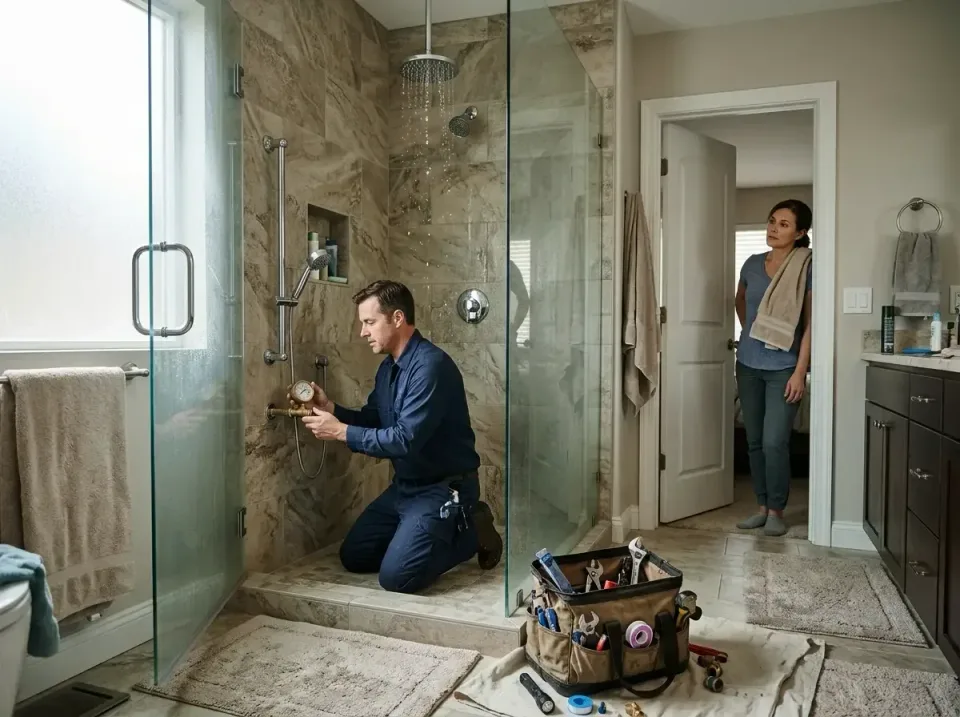
At a home near Canyon de Chelly National Monument, a shower that weakens when another tap opens can point to a supply, pump, or pipe restriction not just a faulty showerhead. Our Chinle crew measures pressure and flow before recommending a repair.
Low humidity increases evaporation and household water demand; if pressure also falls, we check whether the supply can keep pace instead of guessing at a fixture. Hard-water mineral buildup can narrow plumbing passages over time, so we inspect the affected line and components for restrictions.
We serve Chinle properties, including single-story masonry homes and Navajo-style hogans, with a diagnosis shaped around the home’s actual plumbing layout. At Chinle High School, the Public Library, or elsewhere in town, our team explains findings plainly, confirms the work scope, and checks pressure again after the repair.
Start with a simple check: see whether more than one fixture has weak flow.
We trace sudden whole-house pressure drops for homeowners and property managers, checking supply lines and accessible plumbing; diagnostic cost is typically $75–$200, depending on testing and travel.
We repair or replace residential pressure regulators, with cost shaped by valve size and access. Typical replacement runs $250–$600.
We repair residential booster pumps, checking pump controls and connections; typical repair costs depend on pump capacity, parts, and access, with larger or harder-to-reach units costing more.
Install a residential booster pump sized for household flow; typical Chinle, AZ jobs run $800–$2,500, depending on pump capacity and wiring. We serve homes near Downtown Glendale and beyond.
We trace weak hot-water flow in Chinle, AZ homes, checking heater connections and nearby piping; typical repairs run $150–$600, depending on access and parts.
We restore weak faucet flow for Chinle, AZ homeowners, checking the aerator and fixture supply; repair scope and access shape the cost.
We trace and repair pressure-related water leaks in homes, including concealed pipe leaks; access and wall repair needs shape the job scope and cost.
We repair or replace residential well pressure tanks, matching tank size and plumbing connections; replacement typically runs $500–$1,500 depending on tank size and access.
We clear residential and commercial pipe blockages, including debris in accessible drain lines; job pricing depends on blockage depth, pipe access, and the repair needed.
We clear or replace clogged home water filters; service scope and cartridge access affect the job. Prescott Courthouse Plaza is a local reference, while elevation-related rainfall and Flagstaff’s colder winters can sh...
We repair residential softener flow restrictions, checking valve and bypass access; typical repairs run $150–$500, depending on parts and access.
Well water pressure repair for homeowners includes testing the well system and its pressure tank; tank size and plumbing access affect replacement scope, with tank work typically $500–$1,500.
Canyon de Chelly National Monument is part of Chinle’s daily setting, and the high-desert continental climate brings hot summers and cold winters. Those seasonal changes make it useful to consider exposed plumbing and the home’s layout when low flow appears.
Our team has served the area for more than 12 years. We schedule service for local residents and property owners, then check the affected fixtures, supply, and pressure-control equipment rather than replacing parts by guesswork.
Chinle Community Center is another familiar local reference point as we coordinate visits around town. You can expect an explanation of what we found and what the proposed repair addresses.
Weak flow at several fixtures in a Chinle home calls for a source-to-fixture check; a single weak faucet may have a local blockage instead. We compare pressure and flow, then inspect accessible valves, filters, regulators, and pump equipment.
During June-through-September monsoon season, sudden storms can expose drainage or roof leaks; visible water near plumbing is worth noting, but it does not by itself prove a pressure leak. Summer heat also wears outdoor pump equipment, so our crew checks its condition when symptoms point that way. Near Chinle City Hall, residents can make a safe first check by comparing two taps, one at a time.
For a Chinle visit, have the main shutoff location available and tell us which fixtures or floors are affected. We serve ZIP code 86503. Our team measures first, explains the likely cause, and confirms the repair scope before starting.
Yes cold-weather exposure can matter in Chinle, where winter snow and freezes make exposed plumbing worth checking when flow drops. At a property near Chinle Memorial Park, our crew asks whether weak pressure affects one fixture or the whole home before tracing the line and its accessible connections.
Mountain properties need freeze-protected exposed plumbing; where a line is exposed to cold, we inspect for damage rather than assuming the fixture is at fault. A homeowner can safely look for visible drips or a shut valve, but should not dismantle a pressurized fitting.
Canyon de Chelly National Monument provides a familiar point of reference for our Chinle service area. If a softener was recently installed, we also check whether its bypass or filter arrangement is restricting flow. We’ll explain the findings and recommend repair only when the evidence supports it.
For a Chinle plumbing repair, the applicable requirements depend on the work scope; a Phoenix permit or Phoenix-adopted code amendment is not automatically a Chinle rule. Skipping a permit or required inspection can leave work undocumented and create problems when the plumbing is later serviced or reviewed.
Static pressure means pressure measured with no water flowing, so our team distinguishes it from readings taken during use before deciding what needs correction. Where a repair uses drinking-water system components, NSF/ANSI/CAN 61 addresses health effects of materials that contact drinking water.
We confirm the relevant requirements for the job and use components suited to potable-water service. Near Chinle Public Library, as elsewhere in town, we explain what the work involves and whether local approval or inspection applies before proceeding.
The crew tests the system, explains the findings, and completes agreed repairs with safety and future access in mind.
Discuss the Issue
The team asks what you have noticed and coordinates a service route to Chinle. You can describe where pressure is affected so the technician knows what to check.
Test Pressure
The technician records static and flowing pressure, then checks multiple fixtures to help separate a localized restriction from a system-wide concern. You get measured findings to guide the diagnosis.
Complete Repairs
For agreed work, the technician follows applicable safety checks, including shutting off power before opening pump electrical compartments. The crew verifies there are no active leaks before increasing system pressure.
A fixture takes longer than usual to fill a sink or container. Notice whether this happens at one location or several, and share that distinction with the technician; it can help narrow where the restriction may be.
A faucet or shower spray becomes uneven, even when the handle setting stays the same. Keep track of which fixture changes and whether the pattern returns to normal, rather than assuming every fixture has the same cause.
Water flow feels noticeably different from one day to another without a change in how you use the fixture. Paying attention to when and where the difference occurs gives a technician useful context for checking the system.
Changing temperatures after winter can make this a useful time to check pressure equipment and exposed plumbing for concerns. A technician can record system pressure and discuss any findings before warmer weather and household water use change.
Hot weather can add strain to plumbing components, while monsoon storms may affect access and scheduling. Pressure testing can help identify whether regulators, filters, or pump equipment need attention, with route timing coordinated for Chinle.
Dry, windy conditions and cooler nights make fall a practical time to review pressure equipment before winter freezes. A technician can check pressure at fixtures and the system, then explain any repair options.
Cold temperatures and winter freezes can affect plumbing and access around a service visit. If pressure changes, a technician can check the system and discuss findings; route planning accounts for local access and travel conditions.
Permit requirements depend on the work and local rules. Ask who checks whether a permit applies and who handles it, so responsibilities are clear before work begins.
The company coordinates Arizona routes around travel distance, local access, and seasonal demand. Ask what timing is practical for your location and how the team will communicate any scheduling changes.
Ask which checks and repairs are included, and what would require separate approval. A clear scope helps you understand the plan and decide what work to authorize.
Ask for the written scope, payment terms, and any conditions that apply to the proposed work. Reviewing these details beforehand helps you understand what you are agreeing to.
Request a quote online or contact our Chinle, AZ team directly by phone or email.
The shared supply may be restricted or unable to maintain flow, though a fixture blockage can also be responsible. Compare another tap while the shower runs, then tell our Chinle team which fixtures are affected so we can measure and trace the cause.
Yes. Mineral deposits can narrow passages in plumbing components and reduce flow. We check the affected fixture and accessible components before recommending cleaning or repair.
Note whether weak flow affects one fixture or several, and whether it is different on hot and cold water. Keep access to the main shutoff and plumbing equipment clear; do not open pressurized fittings.